
1. Is it packaged or split?
Probably the biggest differentiator in any HVAC system. Pretty much all of these systems use the same stuff inside, but some of them move heat between separate pieces of equipment, while others keep their package tight.
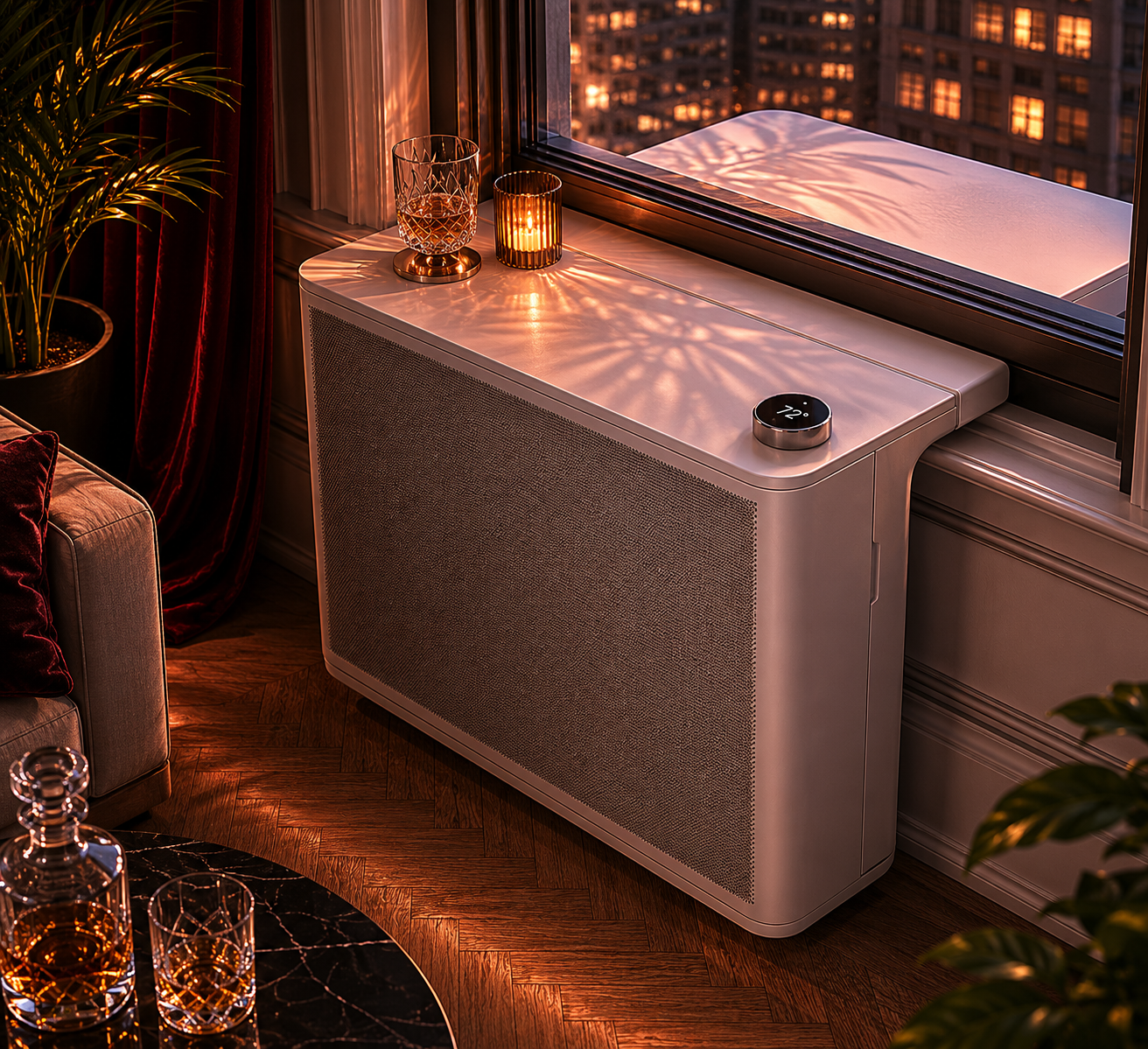
A “packaged” unit has all the refrigerant inside a single box. It just moves heat from one side to the other. You know these as window ACs, but there are a lot of them now: window heat pumps like Gradient or Midea, PTACs and PTHPs (packaged terminal air conditioners and heat pumps) that you’ve seen in hotels and apartments, and rooftop boxes that rely on ducting.

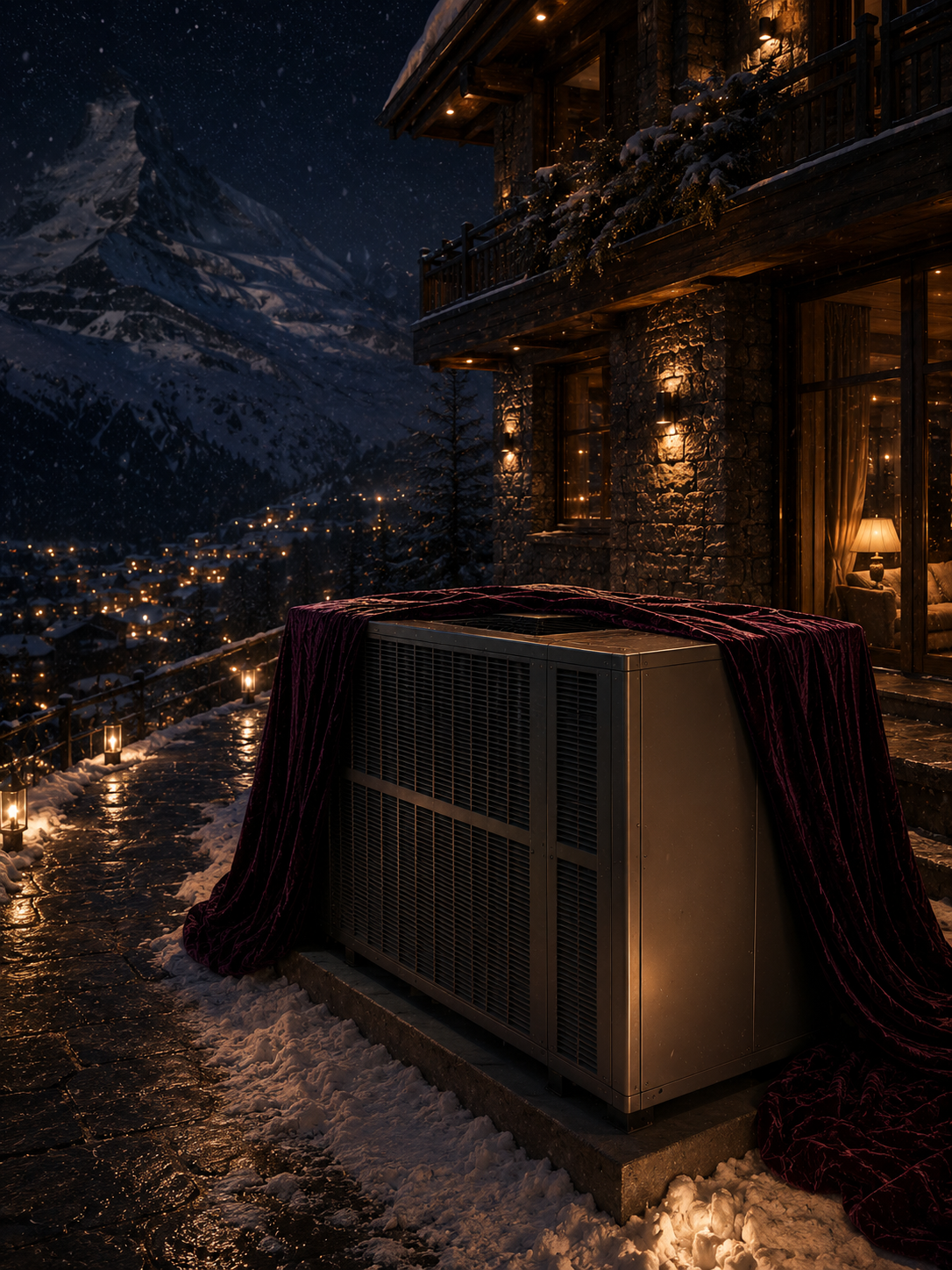

A “split” unit is, well, split: refrigerant (and thus heat) moves from one or more indoor units to and from an outdoor unit using fancy pipes. Standard mini-splits live here, as do larger systems like VRF (variable refrigerant flow) systems. The advantage is modularity: no ducts required, no window required.
Think of a packaged unit as a little space heater. Plug it in wherever, it’ll do its job. The split units are closer to old boiler-style buildings where you’d run hot water or steam through the building and have a radiator where the heat transfer occurs.
2. Is it ducted or ductless?
This question matters more if you’re trying to do multiple rooms or floors versus a single one. It asks if you want to heat and cool the air in one location and move it around (ducted), or locally heat and cool areas individually (ductless, with a head unit per zone).
Ducted systems need a lot more controls to keep things balanced. The heat pump is really only making one temperature of air, so it relies on louvres and dampers to vary how much air flows to each section. Split (ductless) systems can be much more surgical.
Also: ducts are traditionally terrible energy hogs. They’re often poorly sealed (there are whole companies like Aeroseal designed to fix this), and a very high percentage of your expensively conditioned air is lost before it gets where it’s going.
3. Where does the heat go?
The vast majority of heat pumps and air conditioners are called air-to-air. They transfer the temperature of one volume of air (your hot indoor solarium) to another volume of air (outside, next to your condenser unit). This is the default standard and makes up almost all of the systems one would buy. Not because it’s especially efficient, but because it requires very little other infrastructure. There’s already air everywhere.
Other systems put heat into different mediums. A water-source heat pump (air-to-water) uses a water loop instead of outdoor air, which is much more efficient because water holds more heat per unit volume than air. Geothermal takes the same idea and dumps the heat into the ground, which below about 10 metres is a pretty constant temperature and can absorb (or supply) heat without fans.
4. The refrigerant rules just changed
Newer A2L refrigerants (R-32, R-454B) are preferred because they have much lower greenhouse gas potential if they leak. A2L is a safety classification: “mildly flammable, low toxicity.” Sounds scary, in practice just means slightly updated procedures.
As of January 1, 2025, under the EPA’s AIM Act Technology Transitions Rule, it is illegal to manufacture or import new residential or light commercial HVAC equipment using refrigerants with a Global Warming Potential above 700. R-410A (GWP ~2,088) is out. R-32 (GWP 675) and R-454B (GWP 466) are the standard replacements.
There’s a wrinkle: the EPA proposed a reconsideration on September 30, 2025 to remove the installation deadline after R-454B supply shortages caused 300%+ price spikes. As of mid-2026, pre-2025 R-410A equipment can still legally be installed. But for a system you plan to keep for 15 years, R-32 or R-454B is the future-proof choice.
Other details that matter slightly less
How many compressors? You probably don’t care, although more compressors usually mean more potential maintenance points.
Single-phase or 3-phase? Most US homes are single-phase. Commercial and many large multi-family buildings are 3-phase. Larger residential heat pumps will sometimes need a service upgrade.